
Archive for September, 2012
Here’s an interested article from out west that is worthy of re-posting.
http://www.oregonlive.com/business/index.ssf/2012/09/oregons_hard-hit_timber_counti.html
This highlights two things.
First, it shows just how important the forest and timber industry is for local economies. Second, it is also compelling evidence just how much of a mess central planners in government have made out of the timber industry in areas which rely on biomass harvested from government (public) land.
This is why much of the US timber production has relocated the southern and Appalachia regions of the country where stocks of timber are held privately, thus ensuring a resource that more stable and better managed.
For the last eight or so months a common theme that I’ve noticed is that there is a lot of timber out there that should have been harvested a long time ago.

You’ve risked a lot in owning timberland to have your trees produce a product such as the one pictured above.
So what do you need to look for to prevent a timber sale from turning into a salvage operation?
The presence of dead, standing trees is a huge red flag. Finding trees that once dominated the main canopy, like the one pictured below, should prompt the landowner that the stand may be heading into decline.
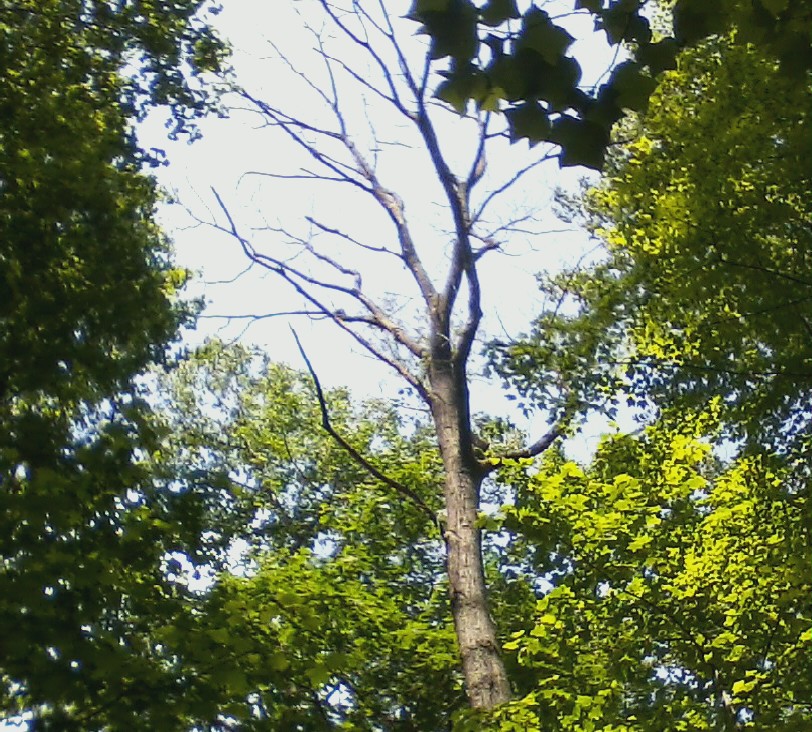
One tree throughout a whole property isn’t anything to worry about. However, having one or several trees per acre throughout a stand should prompt action. Old age, fungal rot, as well as gypsy moth can all contribute to such an occurrence. Make sure that this is an isolated incident, not a regular event.
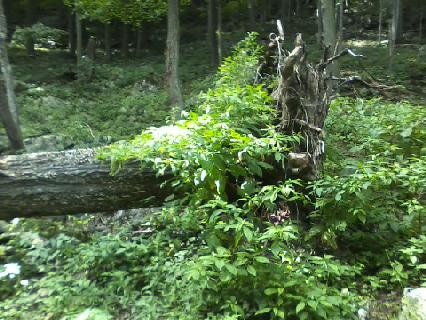
Trees, when past peak maturity, also tend to fall over. It takes tremendous amounts of energy for the root system to support the trunk and it’s crown. At some point, the roots start giving way, resulting in the tree uprooting and falling to the ground.
Don’t let your trees get too big. There’s not one single person who doesn’t like seeing big timber. However, bigger isn’t always better. There comes a point where trees can get too big. Large trees are harder for loggers to handle, and can even be even more difficult for those who saw them into lumber.
Most folks in the hardwood business are better at ease with logs that are 14-20 inches in diameter and many will not even take logs which are larger than 40 inches, and some will have even smaller size restrictions.
Finally, anyone with a stand of Virginia pine should go ahead and cut everything down. Virginia pine, particularly in Virginia’s Piedmont region, can grow in dense stands.
However, it has been, and will always be one of the worst species to cultivate. It produces low grade, knotty lumber, rarely puts on significant volume, and it’s prone to windthrow. Keeping it standing only prolongs any gain in value that would be realized from the cultivation of another more valuable species. Cut your losses and start growing something more beneficial.
Should you have forest land and would like more information on the services offered, give us a call today.
 N. R. Green Resource Consulting, LLC